Compulsory figures were an integral part of figure skating. Tedious, but integral. In 1988, the International Skating Union voted to eliminate them.
The 1990 World Figure Skating Championships were the last with figures. Worldwide, skaters were promised they’d never freeze through another patch session.
However, your skating federation had the final say.
In Canada, figures – also called “patch” – were eliminated at senior, junior, and novice ranks. Other skaters were under the judges’ eyes until the 1996/1997 season, when testing ended for levels and proficiency. Figures were replaced with Skills: three-turns, c-step, s-step, twizzles, and so forth.
Now, there wasn’t a reason for skaters to trace circular patterns on the ice, scratching out an infinity or a snowman. Skaters spent hours honing them, meticulously looping, changing directions and edges.
Often figures decided the outcome of competition before a figure skater’s performed their free skate because of their immense weight in scoring.
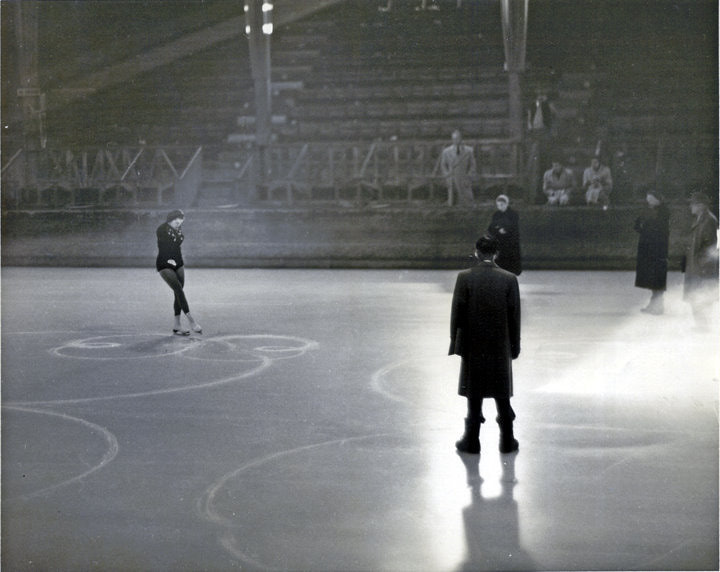
Figures accounted for 60 per cent of the overall score until 1968, then decreasing to 50 per cent. However, there was one problem. Before 1973, there wasn’t a long program. Figures and free skate were 50/50, pressuring a skaters to be an all around skater.
Case in point in the early 70s, a great deal of excitement brewed around American champion Janet Lynn. She was groomed to be the next Peggy Fleming, however, Austria’s Beatrix Schuba was a powerhouse in compulsory figures. Schuba tended to lag in the free skate – Lynn’s strength.
At the 1972 Winter Olympics in Sapporo, Japan, that was the case in the women’s competition. The ice for the compulsories was dyed a lovely ocean blue so the skaters’ etching would stand out. Not an issue for Schuba, one could imagine. But a nightmare for Lynn.
Schuba won the figures, and Lynn placed fourth place entering the free skate. Although Lynn won the free skate and Schuba placed seventh, Trixi’s strong compulsory marks were enough to win the gold medal. Lynn won the bronze. Canada’s Karen Magnussen won the silver medal.
Figures went from 40 to 30 per cent and worth 20 at the 1990 World Figure Skating Championships in Halifax, Nova Scotia, Canada, where they were skated for the final time.
Defending world champion, Midori Ito, was poised to dominate women’s skating after the elimination of figures with her powerful combinations, tremendous spins, and stunning triple Axel. In Halifax, Ito was on her final figure when her blade slid off the etching.
After two figures, Ito placed 10th compulsories. To no one’s surprise, she won the short and long programs – and it was enough for the silver medal. Unable to defend her 1989 title, Ito would never stand in top spot of a world or Olympic podium despite the elimination of figures.
There are different sides about whether eliminating compulsories was the right decision. Figures were tedious, time consuming, and required excess ice time – resulting in higher fees. The time was better spent on other areas of skating: free skate and dance. However, figures taught discipline, concentration, balance, and edge control.
Long after the elimination of figures, one could say skaters aren’t original anymore, it’s the same jumps and spins.
I’ll admit, I enjoy watching videos of figure skating from the 1970s on when doubles and delayed Axels were in vogue. When footwork sequences don’t seem contrived and repetitive. This is hindsight though, as I skated during the first quad and power house pairs era.
But has the audience ever given a standing ovation for a figure eight?
 Skating Scene